
Our Home is a Slow-Made Archive
Our home is a mix of the practical and the personal. Some things lean more towards the functional—like our sofa and bed, chosen for comfort and durability. But many others have stories behind them: the oak school desk we restored, a dining table we assembled from salvaged legs and a vintage tabletop, hand-woven rugs collected over time. Even our walls express us—a postcard from a friend, a tapestry from Cairo weavers, art made by people we love.
But the heart of our home beats in the bedroom, where a small design frustration sparked our first creation. We were both tired of the harsh bedside lights—too bright for reading, too aggressive for winding down. Toma, then studying Lighting Design at KTH, experimented with: taping diffusers to bulbs, angling lights at the walls, making various attachments. It was playful, half-serious experimentation. Fun, but not exactly sustainable as a long term solution.
Then something unexpected happened. While cleaning out her closet, Nada found an unassuming egg—an ostrich egg she’d picked up years ago during a family trip to South Africa. With that lighting problem in mind, she popped a flashlight inside just to see what would happen.
The result? A soft, diffused, almost moonlike glow.
A video call to Toma (then in Italy) sealed it. At the end of that trip, the egg made its way from Cairo to Stockholm. We hung it temporarily from a shelf bracket—just to test. For weeks we lived with that glow: warm enough for reading, soft enough for sleep. It lit the room like the moon tracking across the wall. We were in love.
Then came the actual design process:
- The Walnut Cap: To conceal the hole and refine the form
- The Cord: Burgundy, not hidden but celebrated as part of the piece
- The Oak Wall Frame: Holding the lamp at the perfect distance, with invisible fixings
What started as a fix for bad lighting became Lunar Lumin, our first lighting piece. Today it still hangs above a handmade alder nightstand we built to complement it—a daily reminder that good design can start from everyday problems and accidental rediscovery.
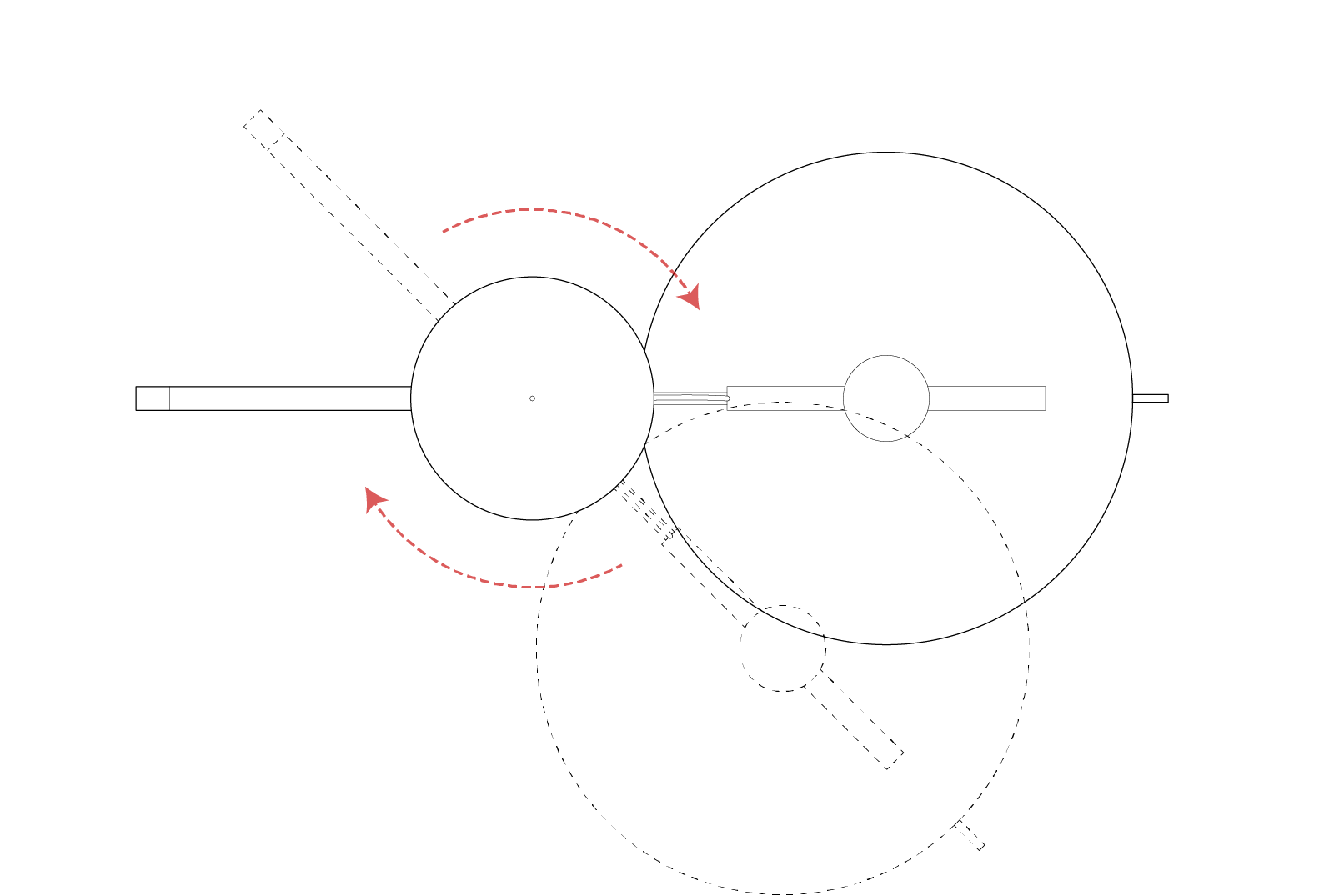
That same approach sparked Oofo, our next piece. We had a ceiling cable in the living room—perfectly placed if the room had followed the 1940s layout it was built for. But the room had since gotten an open kitchen shifting the living area, and now the cable hovered awkwardly off-center. Instead of tearing open the ceiling, we thought: What if the light could move to where it’s needed?
Oofo was the answer—a rotating pendant that orbits its fixed ceiling point:
- Upper Pivot Cone: Disguises the ceiling plate, allows 360° movement
- Lower Paper Lantern: Diffused upward glow, no glare
- Oak Lever Arm: Keeps the balance and hides the mechanics
This way of work became the ethos of Material Lights: comfort solved with geometry, craft and materials that filter light beautifully.
From bedroom to living room, the process repeats:
Fall in love with a material (or feel the itch of a design problem)
Prototype like mad (flashlights in eggs, cones on sticks)
Strip back to the essence—keep only what matters


 Material Lights