
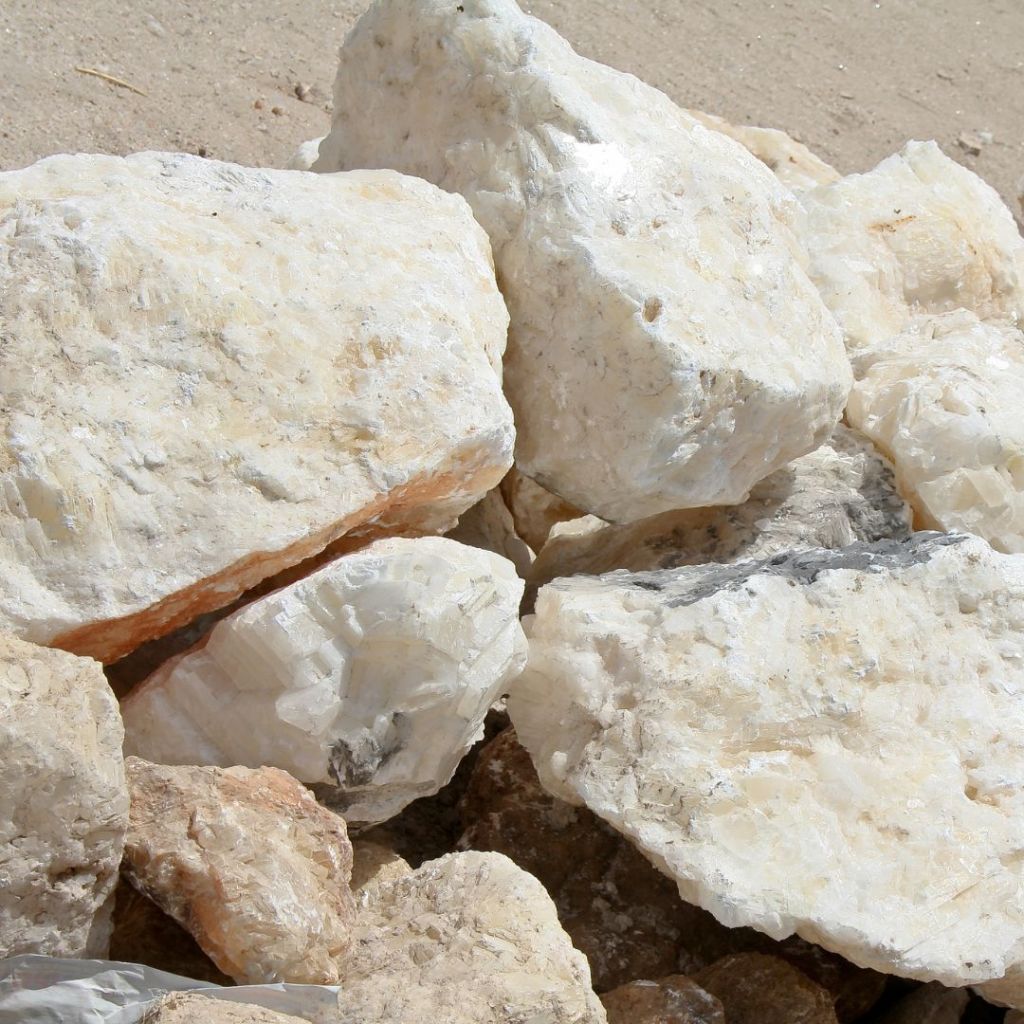
Egyptian alabaster, a soft travertine known for its translucency and fine grain, has been handcrafted for centuries into objects such as lamps, vases, and sculptures. In Luxor’s Qurna Center, skilled artisans continue to preserve this ancient craft, shaping alabaster sourced from Beni Suef, Minya, and Assiut using traditional hand-carving techniques.
Soft Alabaster(Marmar) is ideal for decorative and lighting applications, prized for its ability to diffuse light beautifully. However, it is fragile and porous, meaning it cannot retain liquids and requires careful handling throughout the carving process.
Production Techniques
1. Shaping the Exterior
The process begins with chiseling the raw alabaster block using a handheld pointed hammer. The artisan carefully refines the proportions before wrapping the stone in a protective layer of white glue-treated fabric to reinforce it during hollowing.
2. Carving the Interior
With the exterior stabilized, artisans use hand-carving tools to meticulously hollow out the stone. The protective fabric remains in place to prevent breakage. A hand drill is then used for precision, ensuring the piece reaches the desired thickness and form.
3. Finishing & Polishing
Once hollowed, the piece is shaped and smoothed on a lathe machine, followed by final polishing using specialized polishing motors. This process enhances the stone’s natural luster and translucency.
4. Wax Coating & Final Touches
To protect the finished piece from moisture and enhance its glow, artisans may apply a thin wax coating before briefly heating it in an oven at 150°C (300°F). This final step seals the surface, ensuring durability.
A Craft Rooted in Ancient Egypt
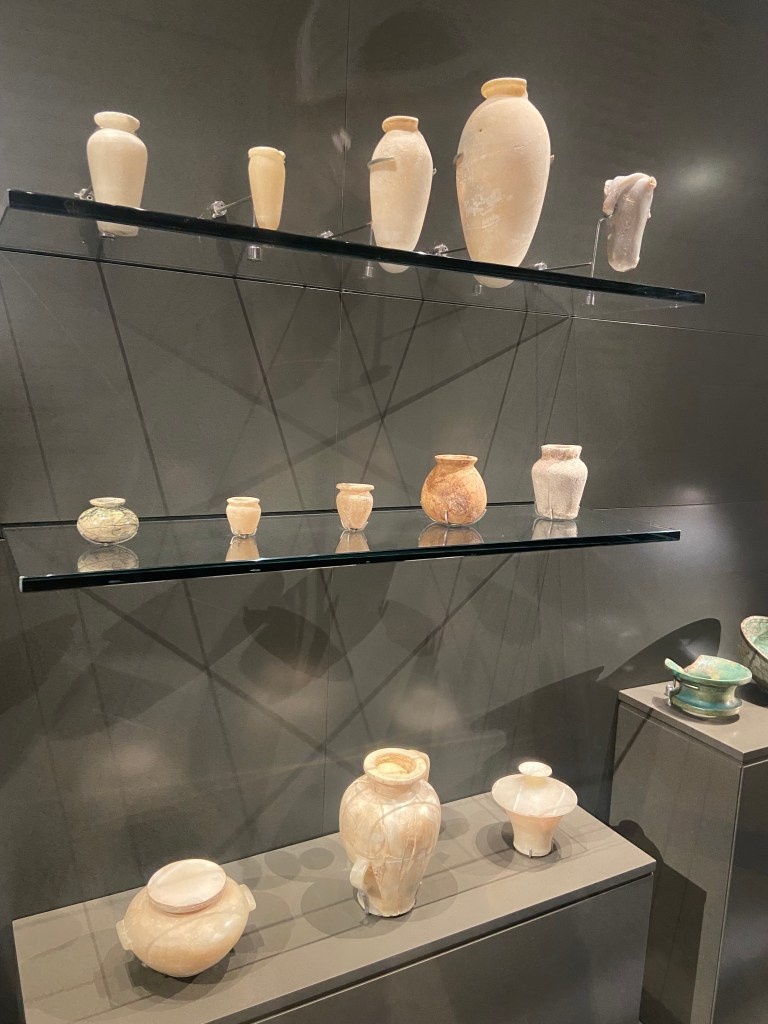
Egyptian alabaster carving is not just a centuries-old tradition—it dates back to ancient Egyptian civilization. As early as the Naqada III Period (circa 3200 BCE) to the 6th Dynasty (circa 2181 BCE), artisans carved alabaster into jars, beakers, bowls, and flasks, often found in tombs as luxury items. Some designs were highly innovative, such as spouted dishes that may have been used for feeding infants or dispensing rare oils.
These exquisite vessels were discovered in archaeological sites such as Saqqara, Tell el-Farkha, Karnak, and Edfu, often alongside other finely worked stones like diorite, basalt, rock crystal, and serpentine. The continued use of alabaster today—particularly in Luxor—connects modern artisans to this deep historical lineage.
Sources:
This article is based on insights from an interview with عم رجب, a skilled alabaster craftsperson from Luxor’s Qurna Center, who shared details on traditional carving techniques, tools, and materials.
Additional historical context and artifact information were referenced from the Grand Egyptian Museum (GEM), drawing from exhibits featuring ancient Egyptian alabaster vessels and stone craftsmanship from the Naqada III Period to the 6th Dynasty.
 Material Lights